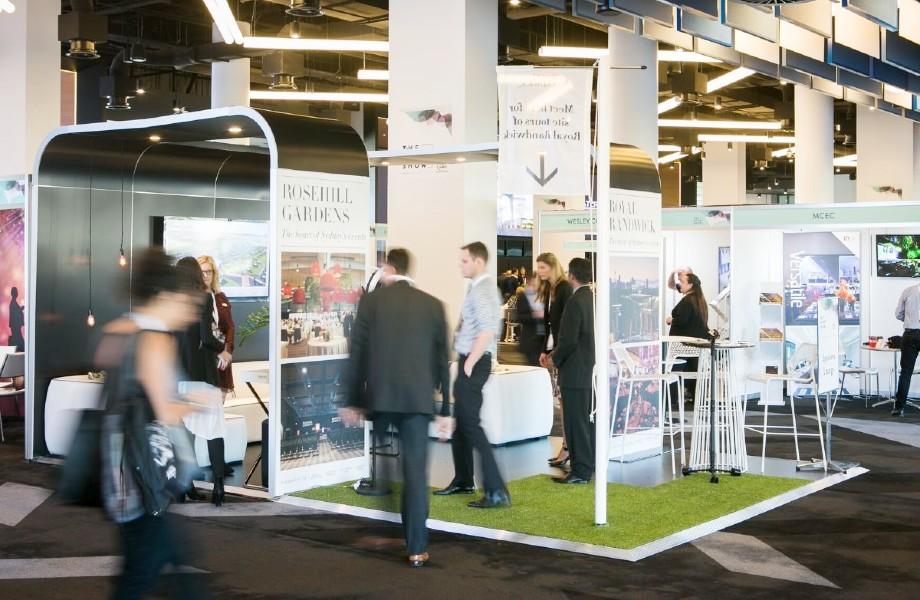
Best Exhibition Venues in Sydney for Hire
Find, compare and book the best exhibition venues Sydney has to offer with VenueNow, Australia's #1 venue hire experts.
Sydney Exhibition Venues for Trade Shows, Expos and Product Launches
Ready to bring your exhibition to life? Whether you're planning an art show, photography exhibition, product launch, or trade display, you'll find a wide range of Sydney exhibition venues to match your vision. From contemporary galleries and warehouse spaces to versatile event venues and waterfront locations, there's a space for every style and scale. Browse VenueNow, compare your options, and book the perfect venue to showcase your work with confidence.

Watermans Room at 12 Micron
Function Venue ●
Sydney CBD
Thomas Keneally at Sydney Harbour Marriott Hotel at Circular Quay
Hotel ●
Sydney CBD
Strangers Function Room at Parliament House Sydney
Function Venue ●
Sydney CBD
Cooper 1+2 at Rydges Sydney Central
Hotel ●
Surry Hills
The Ballroom at Sydney Central Hotel
Hotel ●
Sydney CBD
Blackwattle Room Three Sections at PARKROYAL Darling Harbour, Sydney
Hotel ●
Sydney CBD
Governor's Ballroom at PARKROYAL Parramatta
Hotel ●
Parramatta
Deckhouse Ground Floor at Deckhouse
Function Venue ●
Hunters Hill
Echelon at Pullman Sydney Olympic Park
Hotel ●
Newington NSW
Sydney Exhibition Venue Hire Guide
Planning an exhibition in Sydney? Finding a room big enough is the easy part. Finding one that works once you've added booths, displays, registration desks, catering, storage and a few hundred people wandering around is where things get interesting.
From trade shows and product showcases to art exhibitions and industry expos, Sydney exhibition venues come in plenty of shapes and sizes. The right one depends on what you're displaying, how many people you're expecting and how much infrastructure you need behind the scenes.
Here's what to look for when comparing exhibition venues Sydney.
Start With the Type of Exhibition You're Hosting
Before searching for venues, work out what you're actually putting into the room.
An art exhibition needs good lighting, clean walls and suitable hanging options. A trade show needs floor space, power and easy loading access. A product exhibition may need AV, staging and demonstration areas.
Ask yourself:
- How many exhibitors or displays will there be?
- How many visitors are you expecting at one time?
- Do you need booths or stands?
- Will displays need power?
- Do you need a stage or presentation area?
- Will food and drinks be served?
- How much equipment needs to be brought into the venue?
Once you know those basics, you'll have a much better idea of what type of space you need.
What Type of Exhibition Venue Should You Choose?
Here is a list of some of Sydney's top exhibition venue types to give you a starting point with your venue selection.
Convention and Conference Centres
For larger exhibitions and trade shows, convention and conference centres are the obvious starting point. They're designed to handle large crowds and complex event setups, with open floor plans, loading access, AV infrastructure and plenty of space for booths and displays. They're particularly useful if you're expecting multiple exhibitors who each have their own equipment, furniture and signage.
Hotels and Function Venues
Hotels work well for smaller trade exhibitions, industry showcases and corporate events. You'll usually have access to catering, AV and event staff, and accommodation is convenient if exhibitors or attendees are travelling from interstate. Some hotels also have multiple function rooms, which can be handy if you need separate areas for exhibitions, presentations and networking.
Galleries
Hosting an art, photography, fashion or design exhibition? A gallery may give you much more of what you need from the start. Look for appropriate lighting, hanging systems, wall space and enough room for visitors to move comfortably between displays. Before booking, ask what you're actually allowed to attach to walls, floors and ceilings. "We'll just put a nail there" isn't a conversation you want to have with the venue manager during bump-in.
Blank-Canvas Event Spaces
Warehouses, studios and other blank-canvas spaces give you much more creative freedom. They're great for product launches, immersive exhibitions, fashion showcases and events where the design of the space is part of the experience. The downside is that you may need to bring in more infrastructure yourself, including furniture, lighting, AV and staging.
Creative Studios and Smaller Event Spaces
For intimate exhibitions, pop-ups and emerging artists, smaller studios and event spaces can work brilliantly. You may not need the infrastructure of a convention centre, and a smaller venue can actually create a better atmosphere if your expected attendance is modest. A busy room usually feels much better than an exhibition where everyone's wondering where the other 300 guests went.
Best Areas for Exhibition Venues in Sydney
Location matters for both visitors and exhibitors. Start your search for Sydney exhibition spaces in these areas:
Sydney CBD
The CBD is a convenient choice for corporate exhibitions, industry showcases and events attracting people from across Sydney. Public transport is easy, accommodation is nearby and you'll find everything from hotel function rooms to larger event spaces.
Darling Harbour
For larger exhibitions, trade shows and corporate events, Darling Harbour is worth exploring. The precinct is central, well connected and familiar to interstate visitors. It's also convenient if your exhibition is part of a larger conference or business event.
Surry Hills
Surry Hills suits smaller creative exhibitions, product showcases and design-focused events. It's close to Central Station and gives you access to galleries, studios and less traditional event spaces.
Chippendale
For art, fashion, photography and creative exhibitions, Chippendale is another area worth considering. Its galleries, studios and contemporary spaces can provide a more creative backdrop than a traditional conference venue.
Inner West
Sydney's Inner West can work well for pop-ups, art shows and more experimental exhibitions. Warehouses and flexible event spaces can give you more freedom to customise the layout and overall experience.
How Much Does an Exhibition Venue Cost in Sydney?
As a general guide, expect exhibition venues Sydney to cost around $40 to $60 per person, depending on the venue, facilities and event requirements.
At around $40 to $45 per person, you may find simpler spaces with basic venue facilities. Around $50 per person can give you more flexibility with inclusions, while $55 to $60 per person may suit venues with more substantial event facilities or packages.
But exhibitions aren't always priced neatly per person. Some venues charge a flat hire fee, while others use minimum spends or day rates. Your final budget may also need to cover booth construction, AV, lighting, furniture, security, staffing, signage, cleaning and catering. Ask venues for the total expected cost based on your event setup, not just the advertised hire rate. A blank room might look cheap until you start filling it.
How Much Space Do You Need for an Exhibition?
Don't choose a venue based purely on its advertised standing capacity. Your usable capacity will change once you've added exhibition booths, display tables, registration, seating, stages, catering stations and accessible walkways. Start by sketching a basic floor plan. Allow enough room for visitors to comfortably move between displays without creating bottlenecks. Wider aisles may be needed around popular stands, interactive displays and food stations. For larger events, ask the venue to help calculate capacity based on your proposed exhibition layout. Also think about what happens when everyone arrives at once. A venue may comfortably hold 500 people but still have a terrible bottleneck if there's only room for 30 people around registration.
6 Venue Setup Tips Every Event Planner Should Know
Managing Large-Scale Events: Best Practices for Event Planners
Plan Your Visitor Flow
A good exhibition layout should feel obvious to navigate. Think about where visitors enter, where they register and where you want them to go next. Avoid dead ends where possible and leave enough space around popular displays so crowds don't block the main walkways. If you're hosting talks or demonstrations, position them carefully. A presentation attracting 100 people shouldn't completely cut off access to half your exhibitors. Clear signage helps too. Mark entrances, exits, toilets, presentation areas, food stations and major exhibition zones. You shouldn't need a map worthy of an airport terminal, but guests also shouldn't have to ask where everything is.
Think About Exhibitor Booths and Displays Early
If external exhibitors are involved, get their requirements before finalising the floor plan. Find out how much space each exhibitor needs and whether they'll require tables, chairs, screens, power or internet. Set clear maximum dimensions for booths and displays. This prevents one exhibitor arriving with something twice the size you expected and swallowing half the aisle.
For trade exhibitions, send exhibitors an information pack covering:
- Booth dimensions
- Furniture inclusions
- Power availability
- Wi-Fi
- Loading instructions
- Bump-in and bump-out times
- Parking
- Venue restrictions
- Delivery procedures
- On-site contact details
The more information you give people beforehand, the fewer frantic questions you'll get on setup day.
Power and Wi-Fi: Don't Leave It Until Last
Modern exhibitions can use a lot of power. Screens, laptops, lighting, charging stations and interactive displays all need somewhere to plug in. Map out power requirements before finalising your layout. Ask the venue where power outlets are located and whether additional power distribution needs to be organised. For technology-heavy exhibitions, check the venue's Wi-Fi capacity too. "Free Wi-Fi available" doesn't necessarily mean it can handle 40 exhibitors and 500 visitors all connecting at once.
Lighting Matters
Lighting can completely change how an exhibition feels. For art and photography exhibitions, ask whether lighting can be individually adjusted to highlight specific works. For product showcases, you may want additional spotlights or branded lighting. Natural light can look fantastic, but check whether direct sunlight will hit screens, artwork or displays at certain times of day. If you're bringing in specialist lighting, confirm where equipment can be mounted and whether there are restrictions on ceiling installations.
Check Floor and Ceiling Restrictions
This is particularly important for large booths, installations and heavy exhibits. Ask about ceiling height and whether anything can be suspended from above. Some venues have rigging points, while others won't allow hanging installations at all. For heavy equipment or large displays, check the venue's floor-loading limits. Also confirm what can be attached to floors and walls. Tape, screws, adhesive signage and freestanding structures may all be subject to different rules. It's much easier to ask before you've ordered a three-metre installation.
Bump-In and Bump-Out Access
Exhibitions generally involve more equipment than a standard function, so loading access matters. Ask where suppliers and exhibitors unload. Is there a loading dock? How far is it from the exhibition space? Are there goods lifts? Are there stairs or narrow doorways? Also check the access times. If the exhibition opens at 9 am but exhibitors can't access the venue until 7:30 am, make sure that's genuinely enough time to set everything up. For complicated builds, you may need access the previous day. And confirm bump-out deadlines. Nobody wants to discover at 10 pm that everything needs to be removed before midnight.
Storage and Back-of-House Space
Boxes, packaging, spare brochures and equipment have to go somewhere once the exhibition opens. Ask whether there's secure storage or a back-of-house area available during the event. For larger exhibitions, you may also need somewhere for staff and exhibitors to take breaks away from visitors. Keeping empty cartons behind exhibition stands isn't exactly the polished look most organisers are going for.
Registration and Entry
Think about the arrival experience. For ticketed or registered exhibitions, you'll need enough space for check-in desks, ticket scanning and queues. If you're expecting a large opening rush, ask whether multiple registration points can be set up. You'll also need to decide whether attendees receive name badges, wristbands or other credentials and where these will be distributed. For trade exhibitions, consider having a separate exhibitor or VIP entry to reduce congestion.
Questions to Ask Before Booking a Sydney Exhibition Venue
Before signing the contract, ask:
- What's the usable capacity for our proposed floor plan?
- When can exhibitors access the venue for bump-in?
- Is there a loading dock?
- Are goods lifts available?
- What's the ceiling height?
- Are there floor-loading restrictions?
- Can installations be suspended from the ceiling?
- Where are power outlets located?
- Is high-capacity Wi-Fi included?
- Is storage available?
- What furniture is included?
- Can we bring external AV and production suppliers?
- Is security required?
- What are the catering rules?
- When does everything need to be removed?
- What's the cancellation or rescheduling policy?
Get the answers in writing, particularly anything relating to access, power, rigging and production. Those aren't details you want to discover during bump-in.
Find an Exhibition Venue in Sydney
Planning your next exhibition? Browse Sydney exhibition venues on VenueNow and compare capacities, facilities, locations and prices in one place. Shortlist suitable spaces, send an enquiry and find a venue that works for your exhibitors, visitors and event setup.
Planning an exhibition in Sydney? Finding a room big enough is the easy part. Finding one that works once you've added booths, displays, registration desks, catering, storage and a few hundred people wandering around is where things get interesting.
From trade shows and product showcases to art exhibitions and industry expos, Sydney exhibition venues come in plenty of shapes and sizes. The right one depends on what you're displaying, how many people you're expecting and how much infrastructure you need behind the scenes.
Here's what to look for when comparing exhibition venues Sydney.
Start With the Type of Exhibition You're Hosting
Before searching for venues, work out what you're actually putting into the room.
An art exhibition needs good lighting, clean walls and suitable hanging options. A trade show needs floor space, power and easy loading access. A product exhibition may need AV, staging and demonstration areas.
Ask yourself:
- How many exhibitors or displays will there be?
- How many visitors are you expecting at one time?
- Do you need booths or stands?
- Will displays need power?
- Do you need a stage or presentation area?
- Will food and drinks be served?
- How much equipment needs to be brought into the venue?
Once you know those basics, you'll have a much better idea of what type of space you need.
What Type of Exhibition Venue Should You Choose?
Here is a list of some of Sydney's top exhibition venue types to give you a starting point with your venue selection.
Convention and Conference Centres
For larger exhibitions and trade shows, convention and conference centres are the obvious starting point. They're designed to handle large crowds and complex event setups, with open floor plans, loading access, AV infrastructure and plenty of space for booths and displays. They're particularly useful if you're expecting multiple exhibitors who each have their own equipment, furniture and signage.
Hotels and Function Venues
Hotels work well for smaller trade exhibitions, industry showcases and corporate events. You'll usually have access to catering, AV and event staff, and accommodation is convenient if exhibitors or attendees are travelling from interstate. Some hotels also have multiple function rooms, which can be handy if you need separate areas for exhibitions, presentations and networking.
Galleries
Hosting an art, photography, fashion or design exhibition? A gallery may give you much more of what you need from the start. Look for appropriate lighting, hanging systems, wall space and enough room for visitors to move comfortably between displays. Before booking, ask what you're actually allowed to attach to walls, floors and ceilings. "We'll just put a nail there" isn't a conversation you want to have with the venue manager during bump-in.
Blank-Canvas Event Spaces
Warehouses, studios and other blank-canvas spaces give you much more creative freedom. They're great for product launches, immersive exhibitions, fashion showcases and events where the design of the space is part of the experience. The downside is that you may need to bring in more infrastructure yourself, including furniture, lighting, AV and staging.
Creative Studios and Smaller Event Spaces
For intimate exhibitions, pop-ups and emerging artists, smaller studios and event spaces can work brilliantly. You may not need the infrastructure of a convention centre, and a smaller venue can actually create a better atmosphere if your expected attendance is modest. A busy room usually feels much better than an exhibition where everyone's wondering where the other 300 guests went.
Best Areas for Exhibition Venues in Sydney
Location matters for both visitors and exhibitors. Start your search for Sydney exhibition spaces in these areas:
Sydney CBD
The CBD is a convenient choice for corporate exhibitions, industry showcases and events attracting people from across Sydney. Public transport is easy, accommodation is nearby and you'll find everything from hotel function rooms to larger event spaces.
Darling Harbour
For larger exhibitions, trade shows and corporate events, Darling Harbour is worth exploring. The precinct is central, well connected and familiar to interstate visitors. It's also convenient if your exhibition is part of a larger conference or business event.
Surry Hills
Surry Hills suits smaller creative exhibitions, product showcases and design-focused events. It's close to Central Station and gives you access to galleries, studios and less traditional event spaces.
Chippendale
For art, fashion, photography and creative exhibitions, Chippendale is another area worth considering. Its galleries, studios and contemporary spaces can provide a more creative backdrop than a traditional conference venue.
Inner West
Sydney's Inner West can work well for pop-ups, art shows and more experimental exhibitions. Warehouses and flexible event spaces can give you more freedom to customise the layout and overall experience.
How Much Does an Exhibition Venue Cost in Sydney?
As a general guide, expect exhibition venues Sydney to cost around $40 to $60 per person, depending on the venue, facilities and event requirements.
At around $40 to $45 per person, you may find simpler spaces with basic venue facilities. Around $50 per person can give you more flexibility with inclusions, while $55 to $60 per person may suit venues with more substantial event facilities or packages.
But exhibitions aren't always priced neatly per person. Some venues charge a flat hire fee, while others use minimum spends or day rates. Your final budget may also need to cover booth construction, AV, lighting, furniture, security, staffing, signage, cleaning and catering. Ask venues for the total expected cost based on your event setup, not just the advertised hire rate. A blank room might look cheap until you start filling it.
How Much Space Do You Need for an Exhibition?
Don't choose a venue based purely on its advertised standing capacity. Your usable capacity will change once you've added exhibition booths, display tables, registration, seating, stages, catering stations and accessible walkways. Start by sketching a basic floor plan. Allow enough room for visitors to comfortably move between displays without creating bottlenecks. Wider aisles may be needed around popular stands, interactive displays and food stations. For larger events, ask the venue to help calculate capacity based on your proposed exhibition layout. Also think about what happens when everyone arrives at once. A venue may comfortably hold 500 people but still have a terrible bottleneck if there's only room for 30 people around registration.
6 Venue Setup Tips Every Event Planner Should Know
Managing Large-Scale Events: Best Practices for Event Planners
Plan Your Visitor Flow
A good exhibition layout should feel obvious to navigate. Think about where visitors enter, where they register and where you want them to go next. Avoid dead ends where possible and leave enough space around popular displays so crowds don't block the main walkways. If you're hosting talks or demonstrations, position them carefully. A presentation attracting 100 people shouldn't completely cut off access to half your exhibitors. Clear signage helps too. Mark entrances, exits, toilets, presentation areas, food stations and major exhibition zones. You shouldn't need a map worthy of an airport terminal, but guests also shouldn't have to ask where everything is.
Think About Exhibitor Booths and Displays Early
If external exhibitors are involved, get their requirements before finalising the floor plan. Find out how much space each exhibitor needs and whether they'll require tables, chairs, screens, power or internet. Set clear maximum dimensions for booths and displays. This prevents one exhibitor arriving with something twice the size you expected and swallowing half the aisle.
For trade exhibitions, send exhibitors an information pack covering:
- Booth dimensions
- Furniture inclusions
- Power availability
- Wi-Fi
- Loading instructions
- Bump-in and bump-out times
- Parking
- Venue restrictions
- Delivery procedures
- On-site contact details
The more information you give people beforehand, the fewer frantic questions you'll get on setup day.
Power and Wi-Fi: Don't Leave It Until Last
Modern exhibitions can use a lot of power. Screens, laptops, lighting, charging stations and interactive displays all need somewhere to plug in. Map out power requirements before finalising your layout. Ask the venue where power outlets are located and whether additional power distribution needs to be organised. For technology-heavy exhibitions, check the venue's Wi-Fi capacity too. "Free Wi-Fi available" doesn't necessarily mean it can handle 40 exhibitors and 500 visitors all connecting at once.
Lighting Matters
Lighting can completely change how an exhibition feels. For art and photography exhibitions, ask whether lighting can be individually adjusted to highlight specific works. For product showcases, you may want additional spotlights or branded lighting. Natural light can look fantastic, but check whether direct sunlight will hit screens, artwork or displays at certain times of day. If you're bringing in specialist lighting, confirm where equipment can be mounted and whether there are restrictions on ceiling installations.
Check Floor and Ceiling Restrictions
This is particularly important for large booths, installations and heavy exhibits. Ask about ceiling height and whether anything can be suspended from above. Some venues have rigging points, while others won't allow hanging installations at all. For heavy equipment or large displays, check the venue's floor-loading limits. Also confirm what can be attached to floors and walls. Tape, screws, adhesive signage and freestanding structures may all be subject to different rules. It's much easier to ask before you've ordered a three-metre installation.
Bump-In and Bump-Out Access
Exhibitions generally involve more equipment than a standard function, so loading access matters. Ask where suppliers and exhibitors unload. Is there a loading dock? How far is it from the exhibition space? Are there goods lifts? Are there stairs or narrow doorways? Also check the access times. If the exhibition opens at 9 am but exhibitors can't access the venue until 7:30 am, make sure that's genuinely enough time to set everything up. For complicated builds, you may need access the previous day. And confirm bump-out deadlines. Nobody wants to discover at 10 pm that everything needs to be removed before midnight.
Storage and Back-of-House Space
Boxes, packaging, spare brochures and equipment have to go somewhere once the exhibition opens. Ask whether there's secure storage or a back-of-house area available during the event. For larger exhibitions, you may also need somewhere for staff and exhibitors to take breaks away from visitors. Keeping empty cartons behind exhibition stands isn't exactly the polished look most organisers are going for.
Registration and Entry
Think about the arrival experience. For ticketed or registered exhibitions, you'll need enough space for check-in desks, ticket scanning and queues. If you're expecting a large opening rush, ask whether multiple registration points can be set up. You'll also need to decide whether attendees receive name badges, wristbands or other credentials and where these will be distributed. For trade exhibitions, consider having a separate exhibitor or VIP entry to reduce congestion.
Questions to Ask Before Booking a Sydney Exhibition Venue
Before signing the contract, ask:
- What's the usable capacity for our proposed floor plan?
- When can exhibitors access the venue for bump-in?
- Is there a loading dock?
- Are goods lifts available?
- What's the ceiling height?
- Are there floor-loading restrictions?
- Can installations be suspended from the ceiling?
- Where are power outlets located?
- Is high-capacity Wi-Fi included?
- Is storage available?
- What furniture is included?
- Can we bring external AV and production suppliers?
- Is security required?
- What are the catering rules?
- When does everything need to be removed?
- What's the cancellation or rescheduling policy?
Get the answers in writing, particularly anything relating to access, power, rigging and production. Those aren't details you want to discover during bump-in.
Find an Exhibition Venue in Sydney
Planning your next exhibition? Browse Sydney exhibition venues on VenueNow and compare capacities, facilities, locations and prices in one place. Shortlist suitable spaces, send an enquiry and find a venue that works for your exhibitors, visitors and event setup.
Frequently Asked Questions
How much does exhibition venue hire cost in Sydney?
As a general guide, expect to spend around $40 to $60 per person for exhibition venue hire in Sydney, depending on the venue and inclusions. Additional costs may include AV, exhibition stands, furniture, lighting, security, staffing and catering.How early should I book an exhibition venue in Sydney?
For a smaller exhibition, aim to start looking around three to six months ahead. Larger trade shows and exhibitions requiring substantial production or custom stands may need six to twelve months or more, particularly if your dates aren't flexible.How much space do I need for an exhibition in Sydney?
It depends on your expected attendance and, more importantly, what you're putting into the space. Booths, displays, stages, catering, registration and walkways all reduce usable capacity. Give potential venues your expected visitor numbers and a rough floor plan so they can confirm a safe and comfortable capacity.What facilities should an exhibition venue have?
Look for good loading access, reliable Wi-Fi, sufficient power, flexible lighting, storage, accessible facilities and enough space for registration and visitor circulation. Larger exhibitions may also require loading docks, goods lifts, rigging points, AV equipment and dedicated back-of-house areas.What should I check before booking an exhibition venue?
Check the usable floor space, capacity, ceiling height, power, Wi-Fi, loading access, bump-in and bump-out times, storage, lighting and accessibility. If you're installing large or heavy displays, also ask about rigging options, door and lift dimensions and floor-loading restrictions.How much does exhibition venue hire cost in Sydney?
As a general guide, expect to spend around $40 to $60 per person for exhibition venue hire in Sydney, depending on the venue and inclusions. Additional costs may include AV, exhibition stands, furniture, lighting, security, staffing and catering.How early should I book an exhibition venue in Sydney?
For a smaller exhibition, aim to start looking around three to six months ahead. Larger trade shows and exhibitions requiring substantial production or custom stands may need six to twelve months or more, particularly if your dates aren't flexible.How much space do I need for an exhibition in Sydney?
It depends on your expected attendance and, more importantly, what you're putting into the space. Booths, displays, stages, catering, registration and walkways all reduce usable capacity. Give potential venues your expected visitor numbers and a rough floor plan so they can confirm a safe and comfortable capacity.What facilities should an exhibition venue have?
Look for good loading access, reliable Wi-Fi, sufficient power, flexible lighting, storage, accessible facilities and enough space for registration and visitor circulation. Larger exhibitions may also require loading docks, goods lifts, rigging points, AV equipment and dedicated back-of-house areas.What should I check before booking an exhibition venue?
Check the usable floor space, capacity, ceiling height, power, Wi-Fi, loading access, bump-in and bump-out times, storage, lighting and accessibility. If you're installing large or heavy displays, also ask about rigging options, door and lift dimensions and floor-loading restrictions.150,000+ customers have used VenueNow to find the perfect venue.





Rated 4.9/5 on Google

Get your venue shortlist in 60 seconds

Want to find out how much a Sydney Exhibition venue costs?
Popular Sydney Venues
Parliament House Sydney
4.6 (258)12 Micron
4.2 (646)Sydney Central Hotel
4.2 (1579)Novotel Sydney Olympic Park
4.1 (1606)PARKROYAL Darling Harbour, Sydney
4.3 (2906)PARKROYAL Parramatta
4.1 (2126)Sydney Harbour Marriott Hotel at Circular Quay
4.3 (4422)Pullman Sydney Olympic Park
4.3 (1760)Capella Sydney
4.7 (687)Rydges Sydney Central
4.1 (2315)